

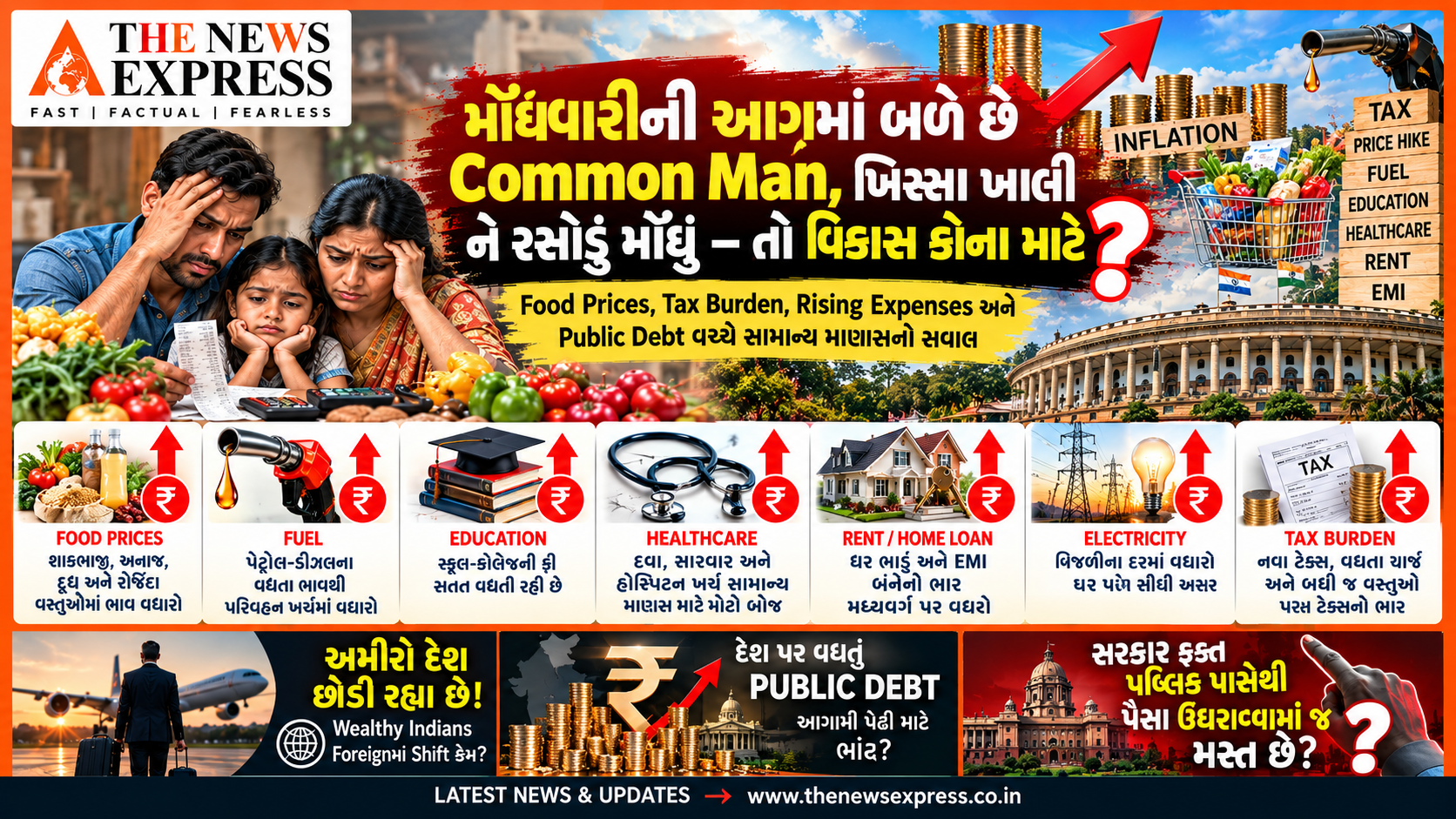
Food Prices, Tax Burden, Rising Expenses અને Public Debt વચ્ચે સામાન્ય માણસનો સીધો સવાલ — “Developmentના આંકડા વધે છે, પણ અમારી Financial મુશ્કેલીઓ કેમ નથી ઘટતી?”
દેશમાં Economic Growth, Infrastructure, GDP અને Development Projectsની ચર્ચા સતત થઈ રહી છે. સરકારો વિકાસના મોટા આંકડા રજૂ કરે છે અને દેશની economyની progressની વાત કરે છે. પરંતુ બીજી તરફ Common Manના household budget પર નજર કરીએ તો picture ઘણી અલગ દેખાય છે.
સામાન્ય પરિવાર માટે આજનો સૌથી મોટો પ્રશ્ન છે — મહિને આવક કેટલી છે અને મહિનો પૂરો થયા પછી હાથમાં કેટલું બચે છે?
કિરાણા, દૂધ, શાકભાજી, Education, Healthcare, Electricity, Fuel, Rent, EMI, Insurance અને અન્ય essential expenses બાદ Middle Class પરિવારની Saving Capacity પર pressure આવવું સ્વાભાવિક છે.
સરકારી CPI data મુજબ August 2026માં Indiaની retail pricesમાં annual inflation માપવામાં આવી હતી અને Food & Beverages પણ CPIના મુખ્ય componentsમાં સામેલ છે. સરકાર પોતે CPIને consumer purchasing power અને household welfare સાથે જોડાયેલો મહત્વપૂર્ણ economic indicator ગણાવે છે.
અહીંથી સવાલ ઊભો થાય છે:
“GDP અને Developmentના આંકડા વધી રહ્યા છે, પરંતુ સામાન્ય માણસનું Financial Stress કેટલું ઘટ્યું?”
રસોડું સૌથી પહેલું કેમ બોલે છે?
મોંઘવારીનો સૌથી સીધો અનુભવ રસોડામાં થાય છે.
એક પરિવાર જ્યારે દર મહિને grocery shopping કરે છે ત્યારે તેને કોઈ Economic Theory સમજવાની જરૂર પડતી નથી. તેને સીધું દેખાય છે કે monthly bill કેટલું આવ્યું.
દૂધ, શાકભાજી, અનાજ, cooking essentials અને household productsના ખર્ચમાં ફેરફાર થાય ત્યારે સૌથી પહેલાં family budget બદલાય છે.
અને પછી શરૂ થાય છે:
ક્યાંક બહાર જવાનું ઓછું,
ક્યાંક shopping postpone,
ક્યાંક savingમાંથી ખર્ચ,
અને ક્યાંક EMI અથવા Creditનો સહારો.
આ જ કારણ છે કે inflationની ચર્ચા માત્ર percentage સુધી મર્યાદિત ન રહેવી જોઈએ.
Common Man માટે real inflation એટલે — મહિનાના અંતે બચતી રકમ કેટલી રહી.
“Tax આપીએ છીએ, પણ બદલામાં શું?” — સવાલ સમજવો જરૂરી છે
Government માટે Tax Revenue ખૂબ મહત્વપૂર્ણ છે. આ પૈસાથી infrastructure, roads, public services, welfare schemes, defence, administration, education અને healthcare સહિત અનેક ક્ષેત્રોમાં ખર્ચ કરવામાં આવે છે.
પરંતુ taxpayerનો એક સ્વાભાવિક સવાલ છે:
“મારા પૈસામાંથી Government જે revenue મેળવે છે, તેનો public benefit મને કેટલો મળે છે?”
આ સવાલનો અર્થ એ નથી કે દરેક tax ખોટો છે.
સવાલ છે Value for Moneyનો.
જો public revenue વધે છે તો citizens માટે:
- Public Healthcare કેટલું affordable બન્યું?
- Government Educationમાં શું સુધારો થયો?
- Public Transport કેટલું efficient બન્યું?
- Employment opportunities કેટલી વધી?
- Small Business માટે operating environment કેટલું સરળ બન્યું?
- Middle Classની financial security કેટલી મજબૂત બની?
આવા પ્રશ્નોના જવાબ data અને measurable outcomesથી મળવા જોઈએ.
Development માત્ર મોટા Projectsનું નામ નથી
Highways, Metro, Airports, Bullet Train, Industrial Corridors અને Digital Infrastructure જેવા projects દેશના long-term developmentનો ભાગ બની શકે છે.
પરંતુ સામાન્ય માણસ માટે developmentની બીજી definition પણ છે.
સારી Job મળે — Development.
બાળકનું Education affordable રહે — Development.
પરિવારને સારી Healthcare મળે — Development.
ઘર ચલાવ્યા પછી Saving થાય — Development.
Small Business સરળતાથી survive કરે — Development.
Youthને opportunity માટે દેશ છોડવાની ફરજ ન પડે — Development.
અટલે સવાલ એ નથી કે development થઈ રહ્યું છે કે નહીં.
સવાલ છે:
“Developmentનો benefit societyના કેટલા વર્ગ સુધી અને કેટલી ઝડપથી પહોંચે છે?”
Public Debt: વિકાસ માટેનું સાધન કે ભવિષ્યનો ભાર?
Government borrowingને સીધું “ખરાબ” કહી શકાય નહીં. દેશો infrastructure અને long-term investment માટે debt લેતા હોય છે.
પરંતુ debt સાથે એક મહત્વનો પ્રશ્ન હંમેશા જોડાયેલો રહે છે:
“Borrowed money ક્યાં વપરાયું અને તેના બદલામાં future economyને શું મળ્યું?”
IMFના India fiscal assessment મુજબ general government debt 2026/27 માટે આશરે 80.7% of GDP projected હતું. IMFના આ measureમાં Centre અને States બંનેનો સમાવેશ થાય છે.
આ આંકડો જોઈને માત્ર “દેશ પર ઘણું દેવું છે” એવો એકતરફી conclusion કાઢવો યોગ્ય નથી. Debtની સાથે economyની growth, interest burden, government revenue અને borrowingનો ઉપયોગ પણ જોવો પડે.
પરંતુ public discussion માટે સવાલ ચોક્કસ છે:
શું borrowing productive assets બનાવી રહી છે?
શું તેની સામે future revenue અને employment opportunities ઊભી થઈ રહી છે?
અને શું આવનારી generation પર અનાવશ્યક financial burden તો નથી વધી રહ્યો?
અમીરો દેશ કેમ છોડે છે? — એકતરફી જવાબ નહીં, ગંભીર ચર્ચા જરૂરી
Wealthy Indians અને entrepreneursની Global Mobility અંગે પણ છેલ્લા કેટલાક વર્ષોમાં ચર્ચા થઈ છે.
પરંતુ “અમીરો દેશ છોડી રહ્યા છે એટલે સરકાર નિષ્ફળ છે” એવો સીધો conclusion કાઢવો યોગ્ય નથી.
લોકો business expansion, international investment, education, lifestyle, family planning, global diversification અને અન્ય અનેક કારણોસર બીજા દેશોમાં રહેવા જઈ શકે છે.
પરંતુ policymakers માટે અહીં એક મહત્વનો question છે:
“Indiaમાં wealth create કરવી જેટલી attractive છે, wealth retain અને reinvest કરવી પણ એટલી જ attractive છે?”
જો entrepreneurને અહીં business growth માટે યોગ્ય infrastructure, predictable policy, ease of doing business અને stable regulatory environment મળે, તો તે economy માટે પણ લાભદાયક બની શકે છે.
અટલે wealth migrationને માત્ર political argument નહીં પરંતુ Economic Policy Issue તરીકે જોવાની જરૂર છે.
Middle Class — સૌથી વધુ Pressure ક્યાં છે?
Middle Classની financial reality ઘણી વખત આ રીતે દેખાય છે:
Salary → Rent/EMI → School Fees → Grocery → Electricity → Fuel → Insurance → Medical → Mobile/Internet → Family Expenses
અને પછી:
“Saving કેટલી રહી?”
આજનો સૌથી મહત્વનો પ્રશ્ન કદાચ આ જ છે.
જો salary વધી રહી હોય પરંતુ essential expenses પણ ઝડપથી વધી રહ્યા હોય, તો nominal income વધવા છતાં real purchasing power અને saving capacity પર pressure રહી શકે છે.
આથી economic successને માત્ર GDP Growthથી નહીં પરંતુ Household Financial Securityથી પણ જોવાની જરૂર છે.
સરકારને સવાલ — પણ જવાબ Dataથી જોઈએ
કડક સવાલ પૂછવો જરૂરી છે, પરંતુ સવાલ facts સાથે હોવો જોઈએ.
જો Government કહે કે Economy Grow થઈ રહી છે, તો સવાલ:
Per Capita Income કેટલું વધ્યું?
જો કહે કે Development થઈ રહ્યું છે, તો સવાલ:
કેટલા Quality Jobs ઊભા થયા?
જો Tax Revenue વધે છે, તો:
Public Servicesમાં શું measurable improvement આવ્યું?
જો Government Borrowing કરે છે, તો:
Future Economic Return શું છે?
અને જો Middle Class પર cost pressure છે, તો:
Affordability સુધારવા માટે શું concrete measures લેવામાં આવી રહ્યા છે?
આ સવાલો કોઈ એક Party કે Government પૂરતા નથી.
આ Public Accountabilityના સવાલો છે.
“સરકાર કોનો વિકાસ કરી રહી છે?” — હવે જવાબ Ground Realityમાં જોઈએ
આજે સામાન્ય માણસનો પ્રશ્ન માત્ર મોંઘવારી નથી.
તેની સાથે જોડાયેલા છે:
Cost of Living
Job Security
Education Cost
Healthcare Expenses
Housing & EMI Pressure
Tax Burden
Limited Savings
અને Future Financial Security.
દેશની economy માટે GDP Growth જરૂરી છે. Infrastructure જરૂરી છે. Investment જરૂરી છે. Tax Revenue પણ જરૂરી છે.
પરંતુ આ બધાની વચ્ચે એક વાત ભૂલવી ન જોઈએ:
Economyનું અંતિમ હેતુ માત્ર મોટા આંકડા ઊભા કરવાનું નથી; લોકોના જીવનમાં economic security અને opportunity ઊભી કરવાનું પણ છે.
The News Express – Bottom Line
Indiaની economy અંગે positive macroeconomic indicators છે, પરંતુ સાથે Cost of Living અને Household Financial Pressure અંગે સામાન્ય નાગરિકના સવાલોને પણ ગંભીરતાથી જોવાની જરૂર છે. Official statistics પોતે CPIને consumer purchasing power અને welfare સાથે જોડે છે.
IMFના projections public debt અને fiscal management અંગે પણ સતત ધ્યાન આપવાની જરૂરિયાત દર્શાવે છે.
તેથી આજે સૌથી કડક અને સીધો સવાલ કદાચ આ છે:
“દેશનો Development Graph ઉપર જઈ રહ્યો છે — પરંતુ સામાન્ય માણસના જીવનનો Graph પણ એ જ ઝડપે ઉપર જઈ રહ્યો છે?”
જવાબ slogansથી નહીં, Ground Reality + Data + Accountabilityથી મળવો જોઈએ.